
How to Remove Water Spots From Car Paint
Those little white spots on your paint and glass can come from almost any water that dries on the car: rain, sprinklers, puddles, washing at home or at a car wash, even kids with squirt guns. They look harmless, but left alone, they can permanently damage your paint. Here’s why, and how to get rid of them.
What Water Spots Are
Unfiltered water carries dissolved minerals, mostly calcium and magnesium, along with salts and dirt. When the water dries, the minerals stay behind as spots. Little by little, they eat a small crater into the clear coat. The next time water lands, it collects in the same spot and makes the crater bigger. This is called etching, and it’s when real damage to the paint happens.
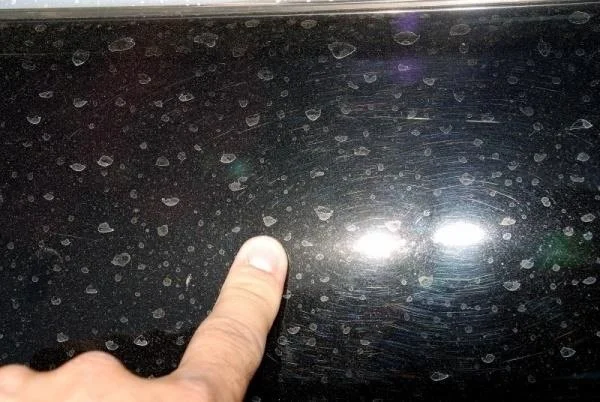
Why to Remove Them Quickly
Caught early, water spots usually wipe right off, even with a simple detail spray. Left on the paint, especially in summer when the sun bakes them in, they get harder and harder to remove. Eventually the only way to remove them is wet sanding, and the worst ones may never fully come out.
How to Prevent Water Spots
- Keep the car from getting wet when you can: park away from sprinklers, pull into the garage, or use a car cover.
- Wash in the shade, early in the morning or in the evening, and dry the car thoroughly.
- Put a barrier between the water and the clear coat. A sealant or a ceramic coating keeps water from ever touching the paint; wax works too, but it wears off fastest. Waxes and sealants need to be reapplied through the year (waxes more often), so follow the product’s directions.
How to Remove Water Spots, From Gentlest to Strongest
Still have spots? Work through these methods in order and stop at the first one that works.
- Wash and dry. Wash the car in the shade and dry it thoroughly. If the car is already clean, a quick detailer and a microfiber towel may be enough.
- Vinegar. Mix distilled water and plain white vinegar 50/50. The vinegar breaks down the minerals. Spray it on a towel a few times and gently rub the spots until they disappear, on cool paint. Then wipe the area with a quick detailer, or wash it, to remove the vinegar.
- Clay bar. Wet the paint with a quick detailer and glide a clay bar over the spots to pick up the mineral deposits sitting on the surface.
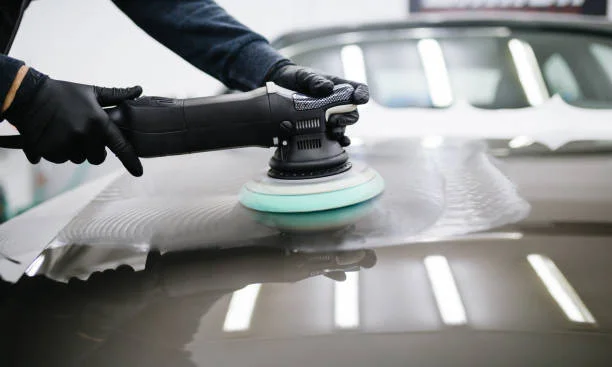
- Polish. Make a few passes with a polishing pad and polish on a machine polisher. If that isn’t enough, step up to a cutting pad and compound, then finish with the polishing pad and polish to restore the gloss.
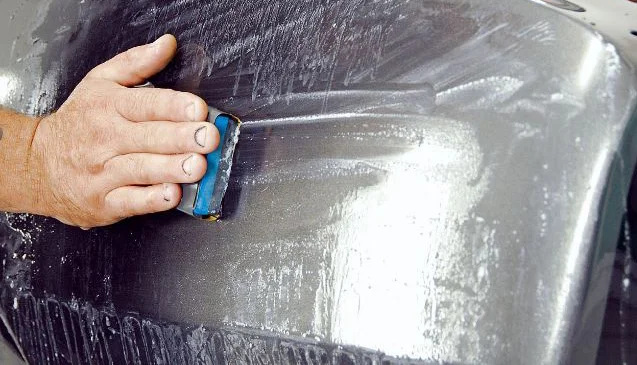
- Wet sanding (last resort). Start with a fine grit, such as 3000, and light pressure, keeping the paper and paint wet. Make a few passes and check; go a little further only if needed. Severe etching may only improve, not disappear. Afterward, compound and polish to restore the gloss. This step is best left to a professional.
Whatever it took, finish by protecting the paint with a sealant or a ceramic coating to help keep new spots from etching in.
Spots That Won’t Come Off?
Our paint polishing removes etched water spots, and a ceramic coating helps keep new ones from forming. Send the estimate form to get started.
15017 E 72nd Pl N, Owasso, OK 74055
Mon–Fri 9am–6pm · Sat 12pm–6pm (calls only) · Sun Closed